A pull on one side of the belly when bending down to lift a box. A dull pressure that shows up at the end of a long shift and fades overnight. A stabbing twinge that arrives every month, more or less in the same week, and has become part of the calendar. Many women live with that for years because "it goes away by itself" or because there is no time to get checked.
The pelvis is the area between the belly button and the groin. The uterus, the ovaries, the bladder, the last stretch of the bowel and a group of muscles that hold all of it up share that space. That is why the same pain can have very different sources, and why describing it well helps so much. This guide walks through the most frequent causes, what to write down before the visit and the warning signs that cannot wait.
Not all pelvic pain is the same
The first thing asked at the visit is what the pain is like, not only where it is. These questions narrow things down a lot:
- Since when? Pain that started a few hours ago is looked at differently from pain that has lasted months. When it lasts six months or longer, it is called chronic pelvic pain.
- Is it steady or does it come and go? Pain that shows up on certain days of the cycle points one way; constant pain points another.
- Which side? One side brings the ovary on that side to mind, although not always. Low and in the middle, the uterus or the bladder.
- What makes it worse? Urinating, a bowel movement, sex, standing for hours or certain movements.
The table below is not for diagnosing yourself at home, but it shows why those details matter:
| What it feels like | What usually gets looked at first |
|---|---|
| A sharp twinge on one side, mid-cycle, lasting hours or a day | Ovulation or an ovarian cyst |
| Steady pressure or heaviness down low, with longer periods | An enlarged uterus, for example from fibroids |
| Burning when urinating, frequent urges and discomfort above the pubic bone | Bladder and urinary tract |
| Pain that comes with days of constipation or gas | Bowel |
| Pain that grows with effort or when changing position | Muscles and ligaments of the pelvis |
| Pain that gets worse every month and stretches beyond the period | Endometriosis, among other causes |
Frequent gynecological causes
Ovulation. Some women feel one-sided pain around the middle of the cycle, when the ovary releases the egg. It is usually mild, lasts from a few minutes to a day or two and can switch sides from month to month. It is normal, but if it keeps getting stronger, it deserves a look.
Ovarian cysts. These are small fluid-filled sacs that form on the ovary. Many come and go with the cycle without causing symptoms. When they grow they can cause pressure or pain on one side. If a cyst bursts or twists the ovary, the pain turns sudden and severe: that is an emergency (see below).
Fibroids. These are noncancerous growths in the wall of the uterus, very common after age 30. Many cause no trouble at all; others bring a feeling of heaviness in the belly, longer periods or a frequent need to urinate because they press on the bladder.
Endometriosis. Tissue similar to the lining inside the uterus grows outside it and becomes inflamed with each cycle. It is suspected when monthly pain gets worse over the years, starts days before the period, shows up during sex or gets in the way of daily life. Many women wait years to mention it because they believe that pain "is just normal." It is not.
Causes that do not come from the uterus or ovaries
A good share of pelvic pain has nothing to do with gynecology.
Bladder. A urinary infection usually brings burning when urinating, urgency, cloudy urine and discomfort or pressure above the pubic bone. The urine test is done at the clinic itself; if that is the main symptom, the visit can focus on urinary tract infections. If fever with chills or pain in the side appears, the infection may have reached the kidney and it is time to go to the emergency room.
Bowel. Constipation, trapped gas or an irritable bowel cause low pain that is easily mistaken for an ovary.
Muscles and posture. Carrying heavy loads, spending the day standing on a production line or sitting behind the wheel for hours tightens the pelvic floor and hip muscles. That pain tends to get worse with certain movements and better with rest.
Before the visit: keep a pain diary
Two or three weeks of notes on your phone are worth more than any description from memory. Write down:
- The day of your cycle when the pain appears and the date of your last period.
- Its intensity on a 1-to-10 scale, and the minutes or hours it sticks around.
- Where you feel it: right, left, center, whether it runs down the leg or up the back.
- What you were doing and what eased it or made it worse.
- Symptoms that come with it: burning when urinating, changes in discharge, nausea, fever, constipation.
- What you took for the pain and whether it worked.
If there is any chance of pregnancy, say so when you arrive. It changes the order in which things get checked.
What happens when you come in for pelvic pain
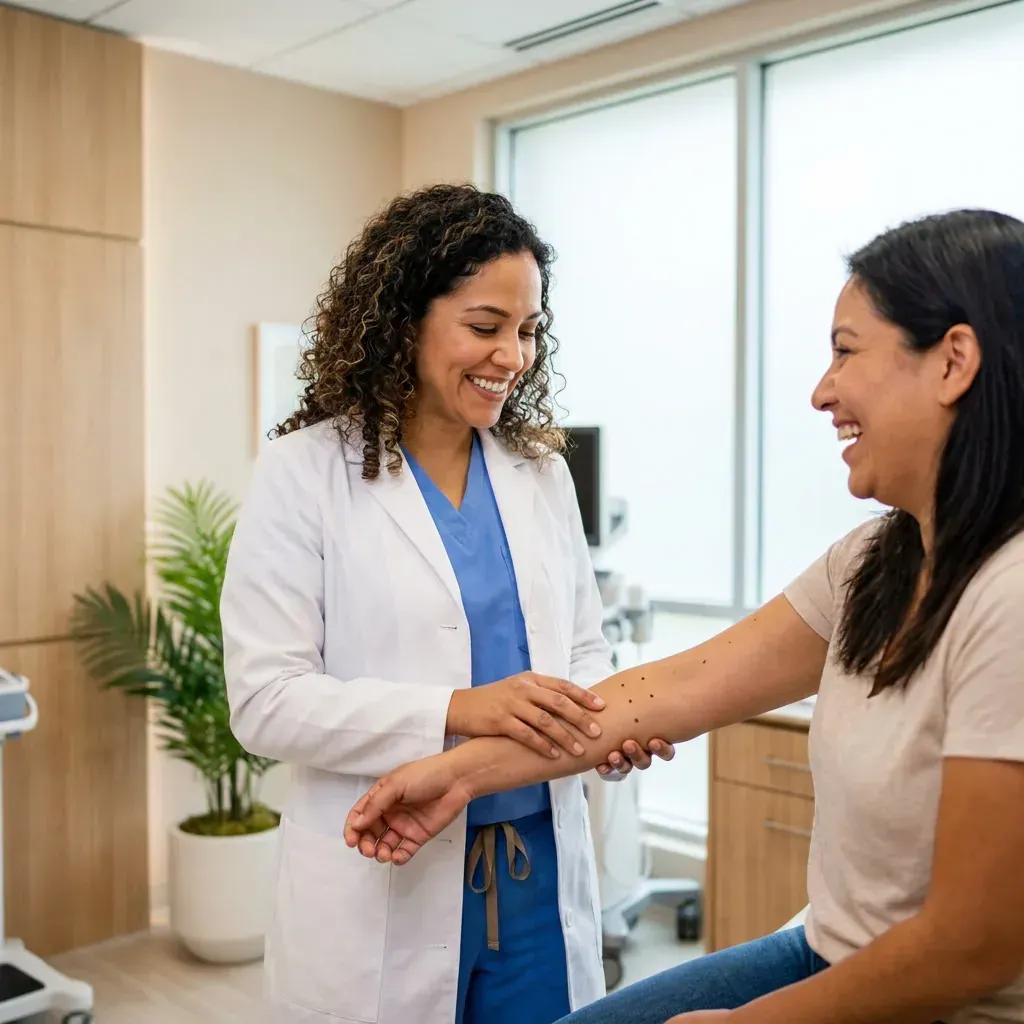
At the gynecology visit on Fondren, the medical team at Clínica Hispana La Caridad starts by listening and going over your history: cycles, past pregnancies, the method you use to avoid pregnancy, surgeries and medications. Then, depending on what you describe, several pieces may be added:
- Pelvic exam, to find the exact spot of the pain and check the uterus and ovaries by touch.
- Urine test, when there is burning, urgency or discomfort above the pubic bone.
- Vaginal culture, if there are changes in discharge or other signs of infection.
- Pregnancy test, done at the clinic and explained during the same visit. Ruling a pregnancy in or out is almost always one of the first steps with low belly pain.
- Pelvic ultrasound, which shows the uterus, ovaries and bladder in the same visit when needed. It is the usual tool when fibroids or cysts are suspected.
With all of that, you get an explanation of what was found and what the plan is. If the result points to something that needs another test or a specialized evaluation, you are told the next step and handed your report.
When pelvic pain cannot wait for a visit: 911 or the ER
Do not wait for a visit and do not drive yourself if any of these happen:
- Pain in the pelvis or lower belly that hits all at once and is so strong you cannot stand or straighten up.
- A confirmed or possible pregnancy with strong pain on one side or with bleeding. That picture can point to an ectopic pregnancy, and it is handled as an emergency.
- High fever together with pelvic pain.
- Very heavy bleeding along with dizziness, cold skin or fainting.
- Pain with vomiting that will not stop or a belly that feels rigid as a board.
If the plan includes medication
When the medical team recommends treatment for the pain or for the cause that was found, there is no need to look for another pharmacy on the way home. You buy the prescription right there at the clinic pharmacy, and before you leave someone goes over how and when to take it. Ask what change in the pain you should notice and after how many days to come back if it does not improve.
Do not get used to pain that changes your routine
If pelvic pain makes you miss work, wakes you at night, shows up during sex or gets a little worse every month, that is reason enough to get checked. At Clínica Hispana La Caridad, in 77036, you can arrive with your pain diary on your phone, explain it in your own language and leave knowing where it comes from and what to do about it.
Need medical attention?
We're here to help. Call now to schedule your appointment or visit our clinic without an appointment.
Call now: +1 (832) 925-8135Related services
Gynecology in Houston: Pap Smear, Cultures & Ultrasound
Gynecology and women's clinic in Houston, TX: Pap smear, pelvic exam, cultures, vaginal infections and ultrasound. In Spanish, walk-in, no insurance needed.
Ultrasound & Sonography
Ultrasound and sonography in Houston, TX: abdominal, pelvic and pregnancy. In Spanish, with affordable pricing.
Urinalysis & Urinary Infection Treatment
Urinalysis and urinary infection treatment in Houston, TX, same day. In Spanish, with affordable pricing.
Pregnancy Testing & Confirmation
Pregnancy testing and confirmation in Houston, TX. Reliable tests and guidance in Spanish, with affordable pricing.
On-Site Pharmacy
On-site pharmacy: after your visit, buy the medicines our medical team prescribed right here, with no extra stop on the way home.